FAVOURITE DRAMATURGY PROJECTS

Nickeshia Garrick, Dawn Jani Birley and Juliana Monk. Photo by Elana Emer
TO A FLAME
by Erin Shields
inspired by E. A. Poe’s “FALL OF THE HOUSE OF USHER”, a visual feast in ASL & English
Nightwood Theatre, Nancy & Ed Jackman Performance Centre, Toronto, September 22 - October 4, 2026
A 1s1 Theatre and Nightwood Theatre co-production
In association with Modern Times Stage Company and Why Not Theatre
Director & Choreographer Josette Bushell-Mingo / Performed by Dawn Jani Birley (MADELINE), Nickeshia Garrick (HARRIET) and Juliana Monk (FANNY), accompanied by Cellist Beth Silver / Dramaturg and Associate Director Birgit Schreyer Duarte / Assistant Director Andrea Donaldson / Set and Costume Designer Jung-Hye Kim / Lighting Designer André du Toit / Composer and Co-Sound Designer Deanna H. Choi / Co-Sound Designer Jenna Geen / Projection Designer Laura Warren / Assistant Projection Designer MacKenzie Cornfield / Stage Manager Sally Roberts / Assistant Stage Manager Michelle Soicher / Production Manager Maya Royer / Technical Director Micah Champagne. Script developed in collaboration with Dawn Jani Birley, Josette Bushell-Mingo, Lisa Karen Cox, Anna Hardwick, Sally Roberts and Birgit Schreyer Duarte. ASL-English Interpreters Gloria Brifoglio, Sheila Johnston, Kate Lewis, Peggy Zehr / ASL Instructors Hands on ASL - Michelle Bourgeois and Merico Tesolin / Photography Elana Emer


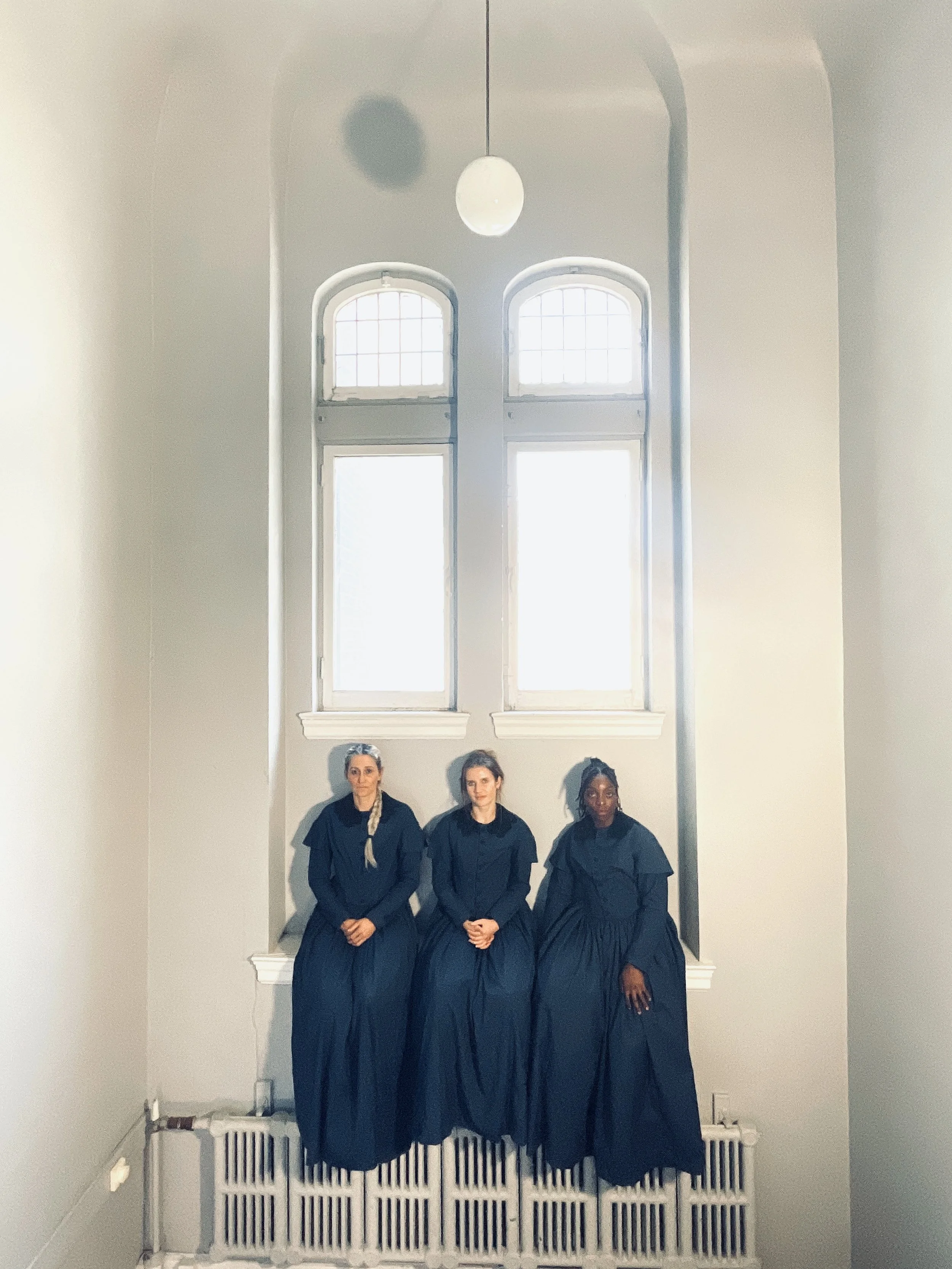
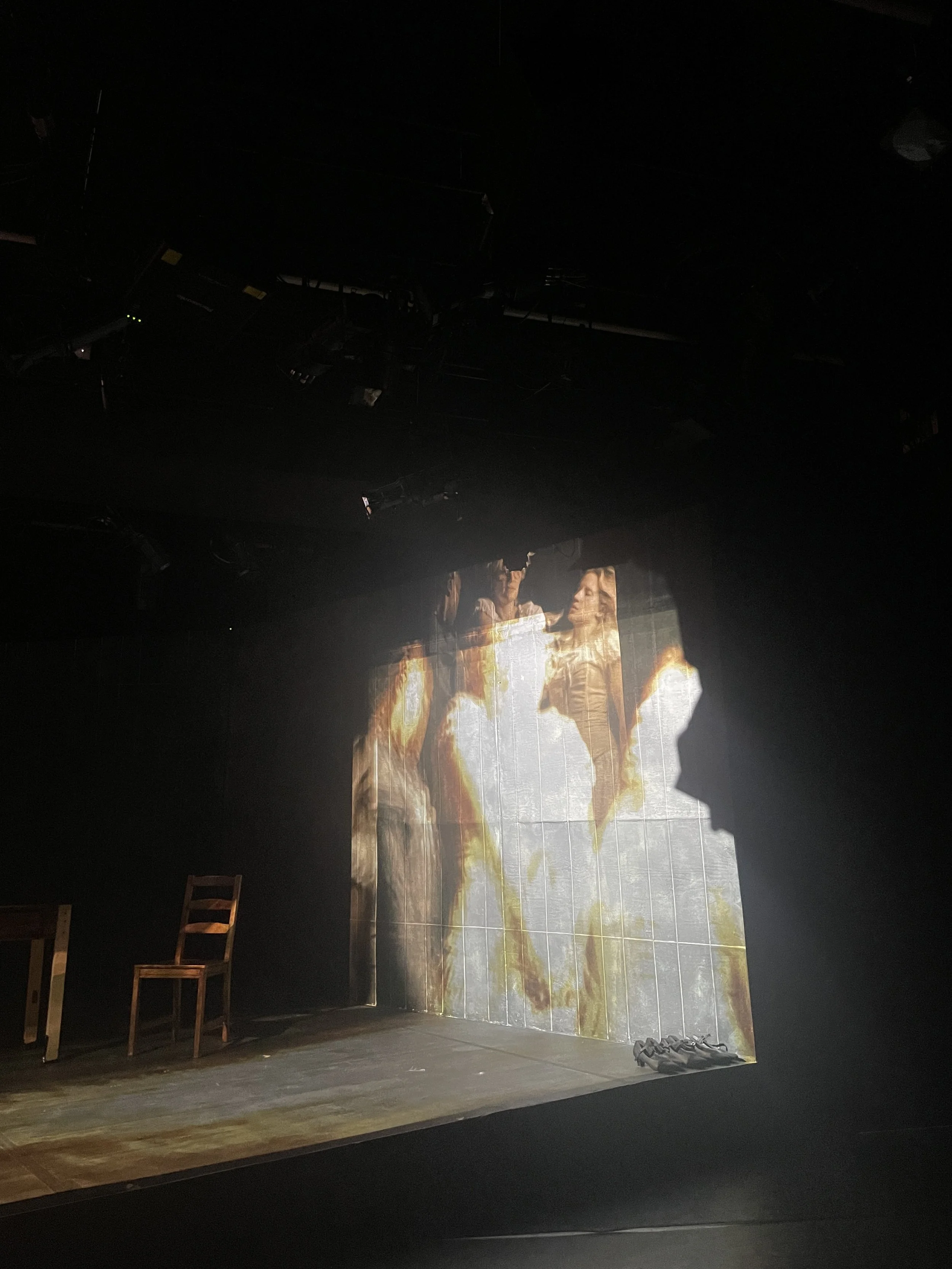
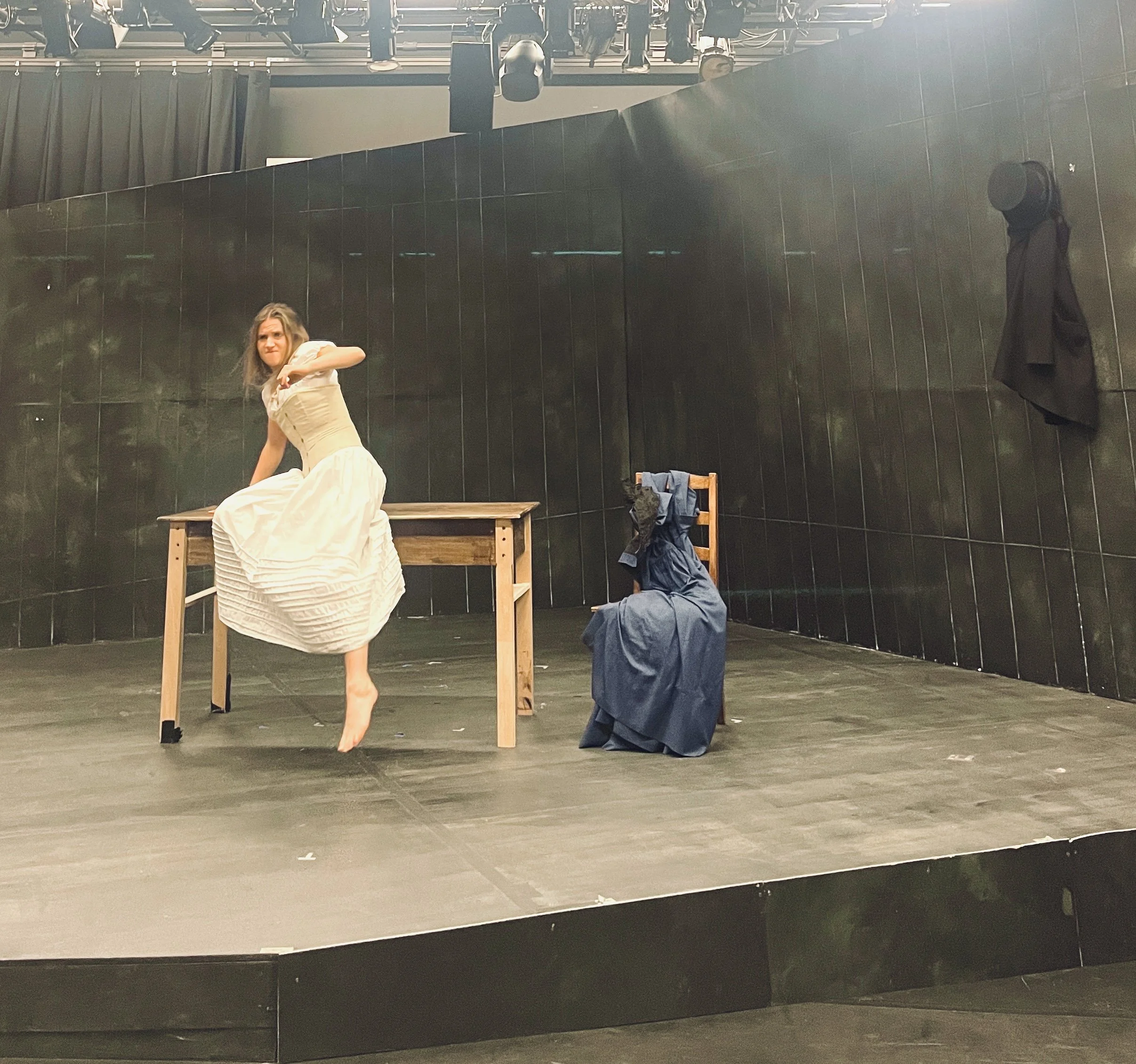
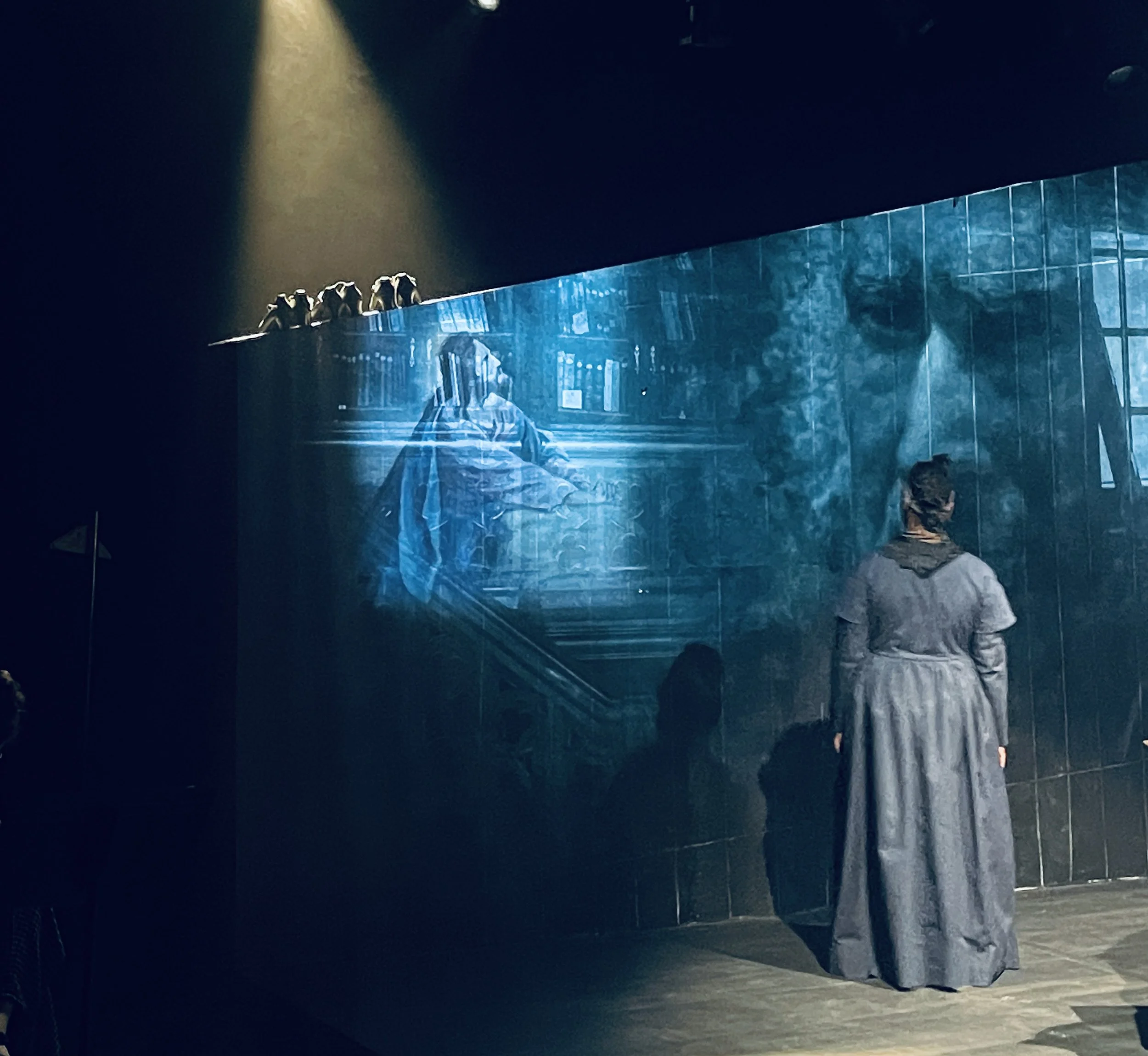
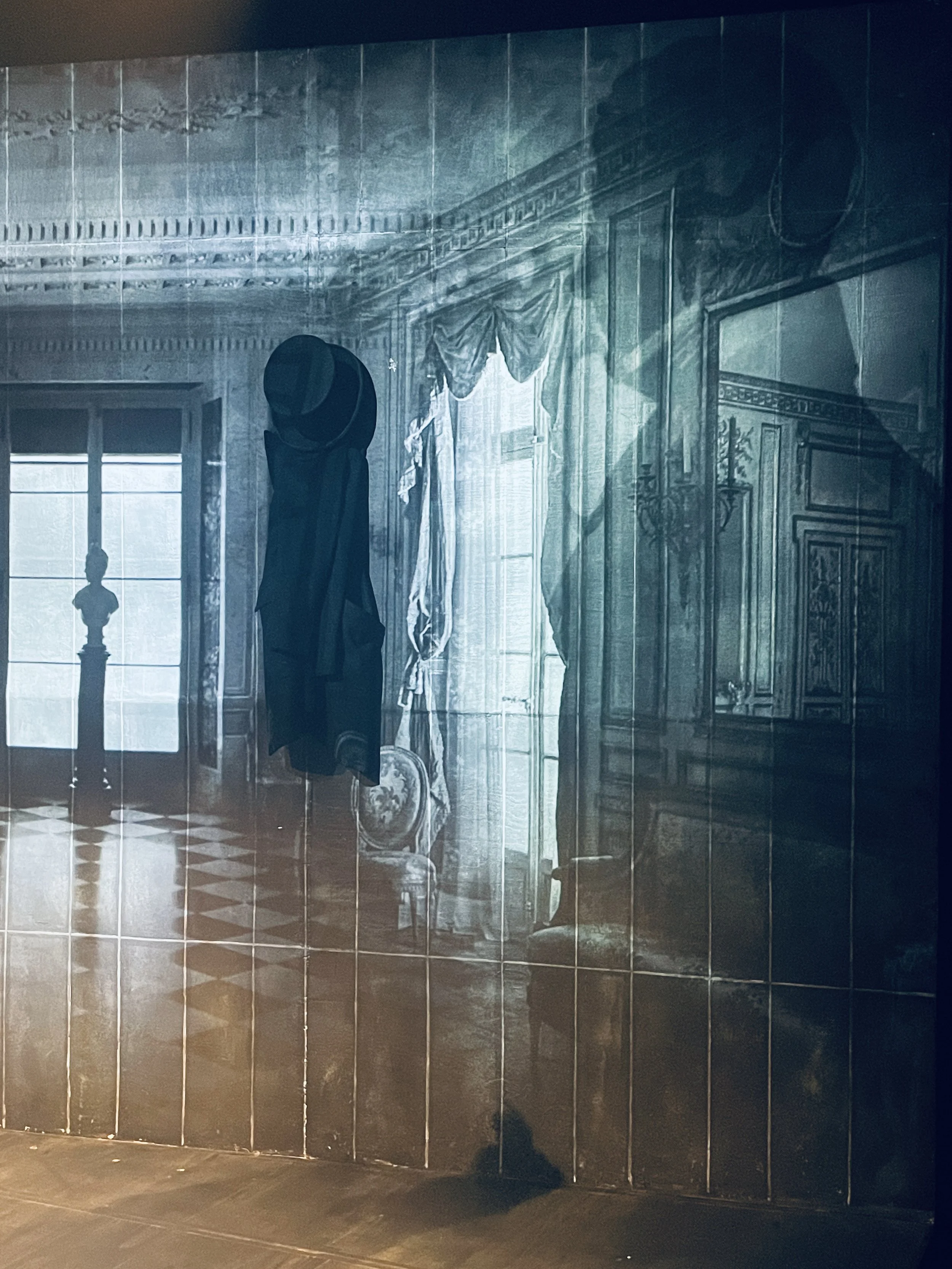
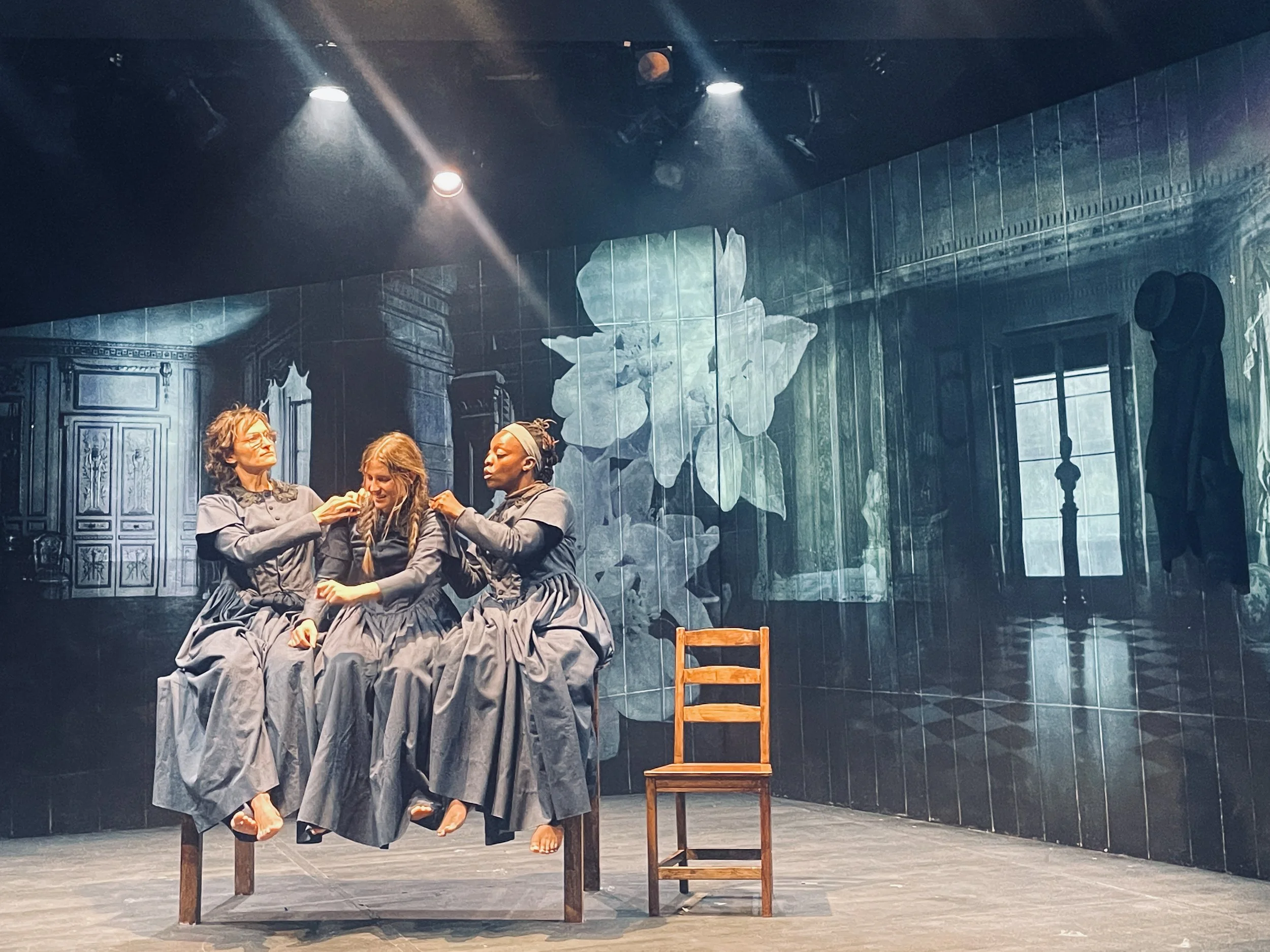
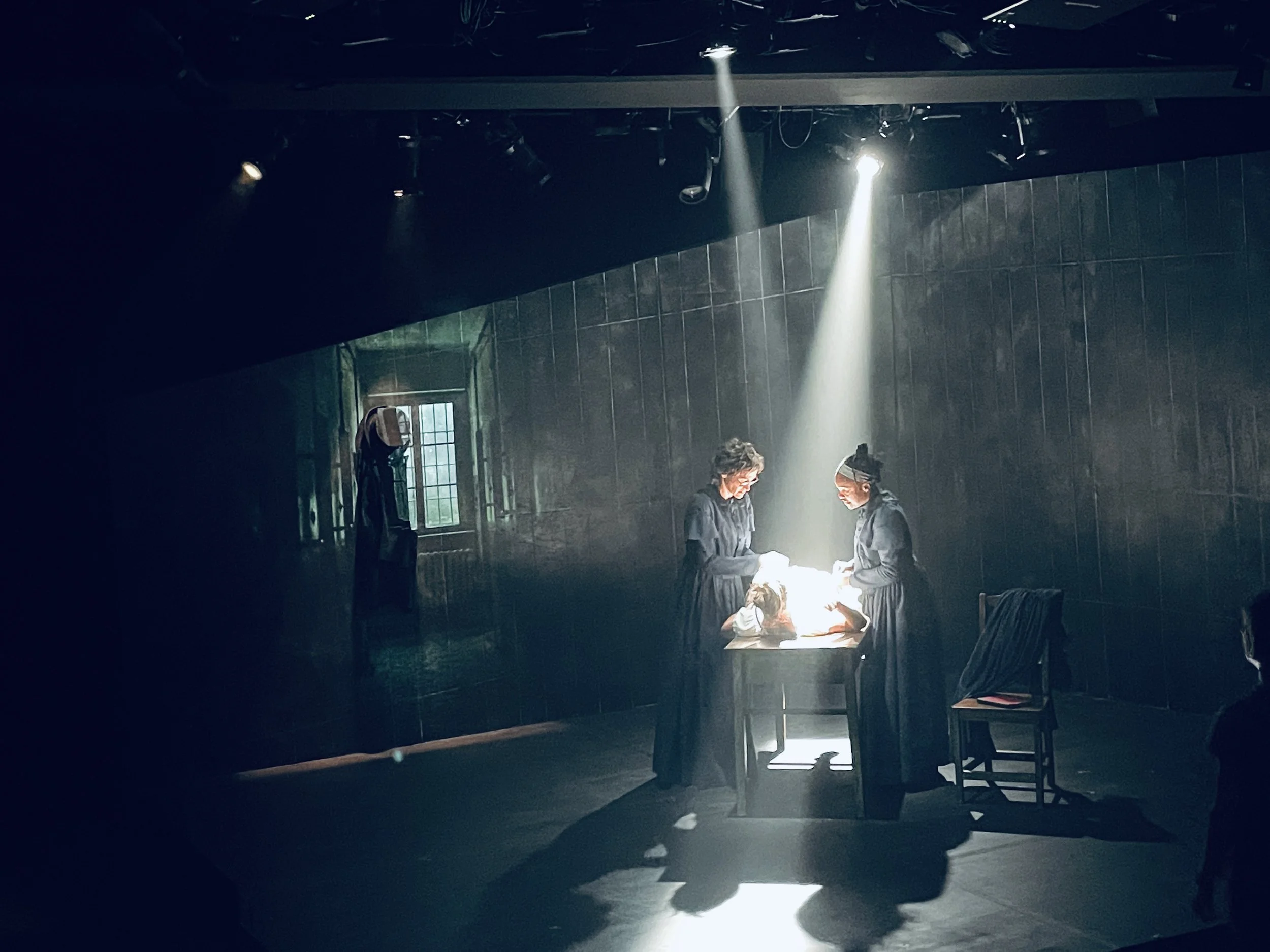
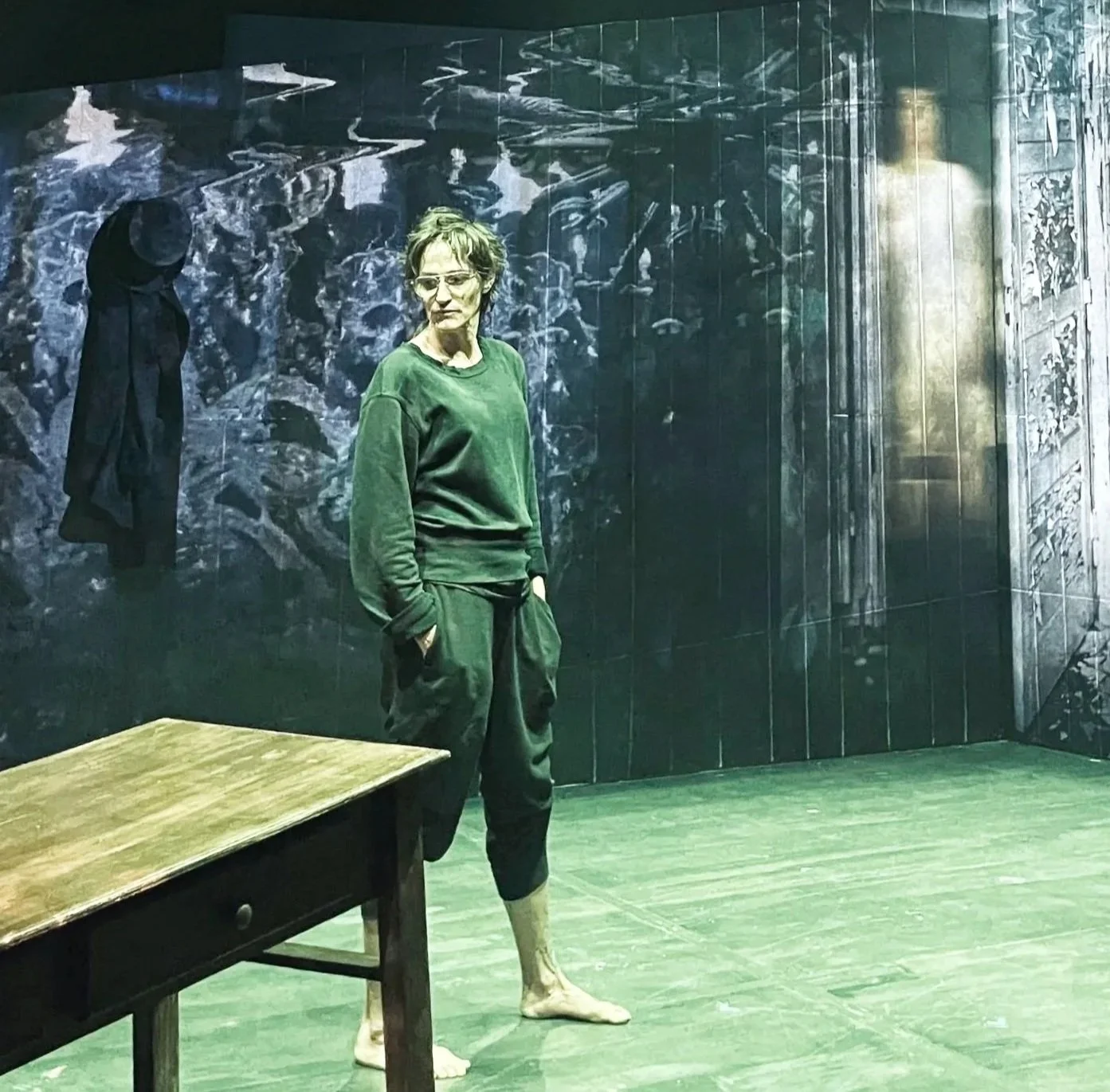
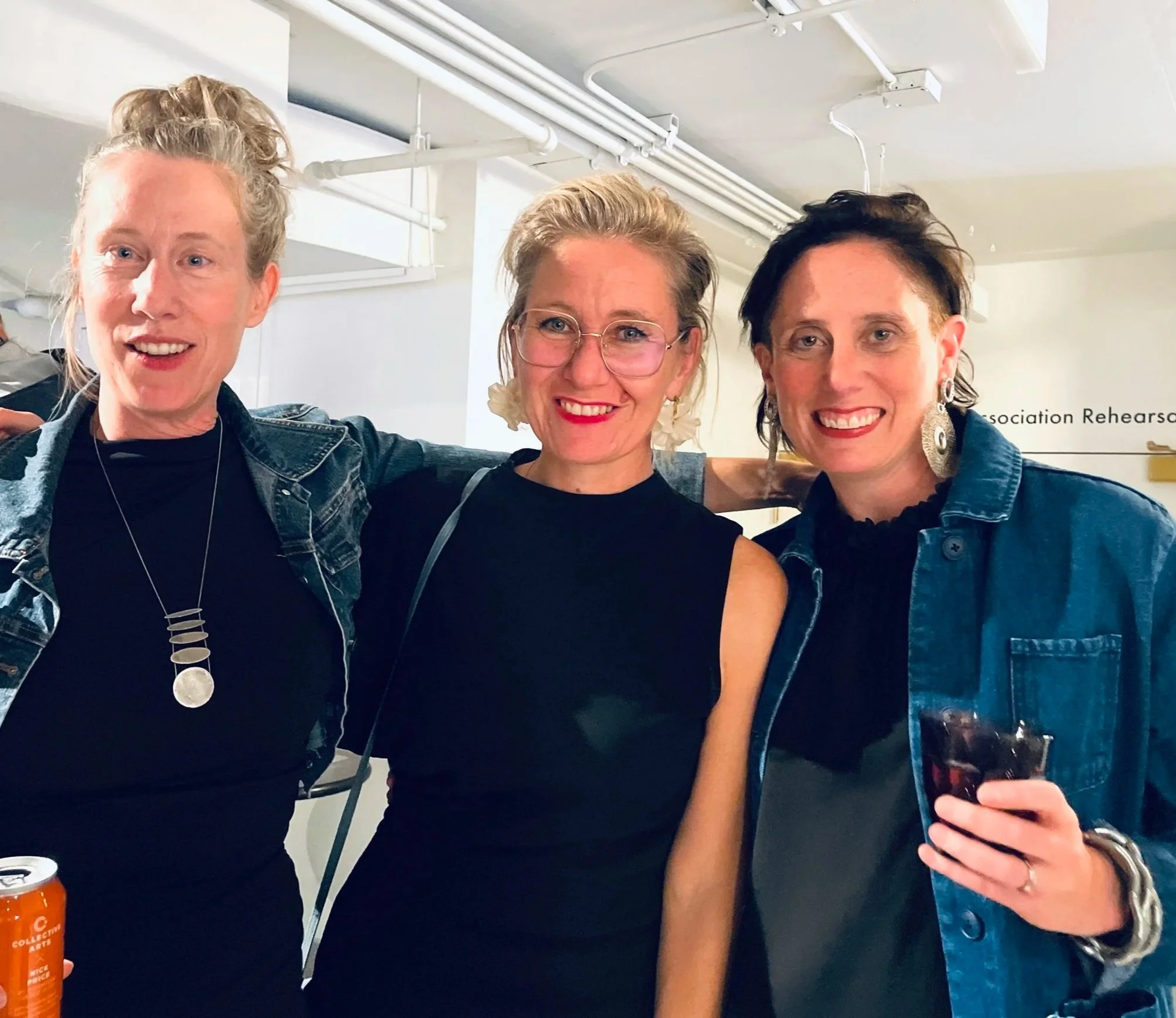
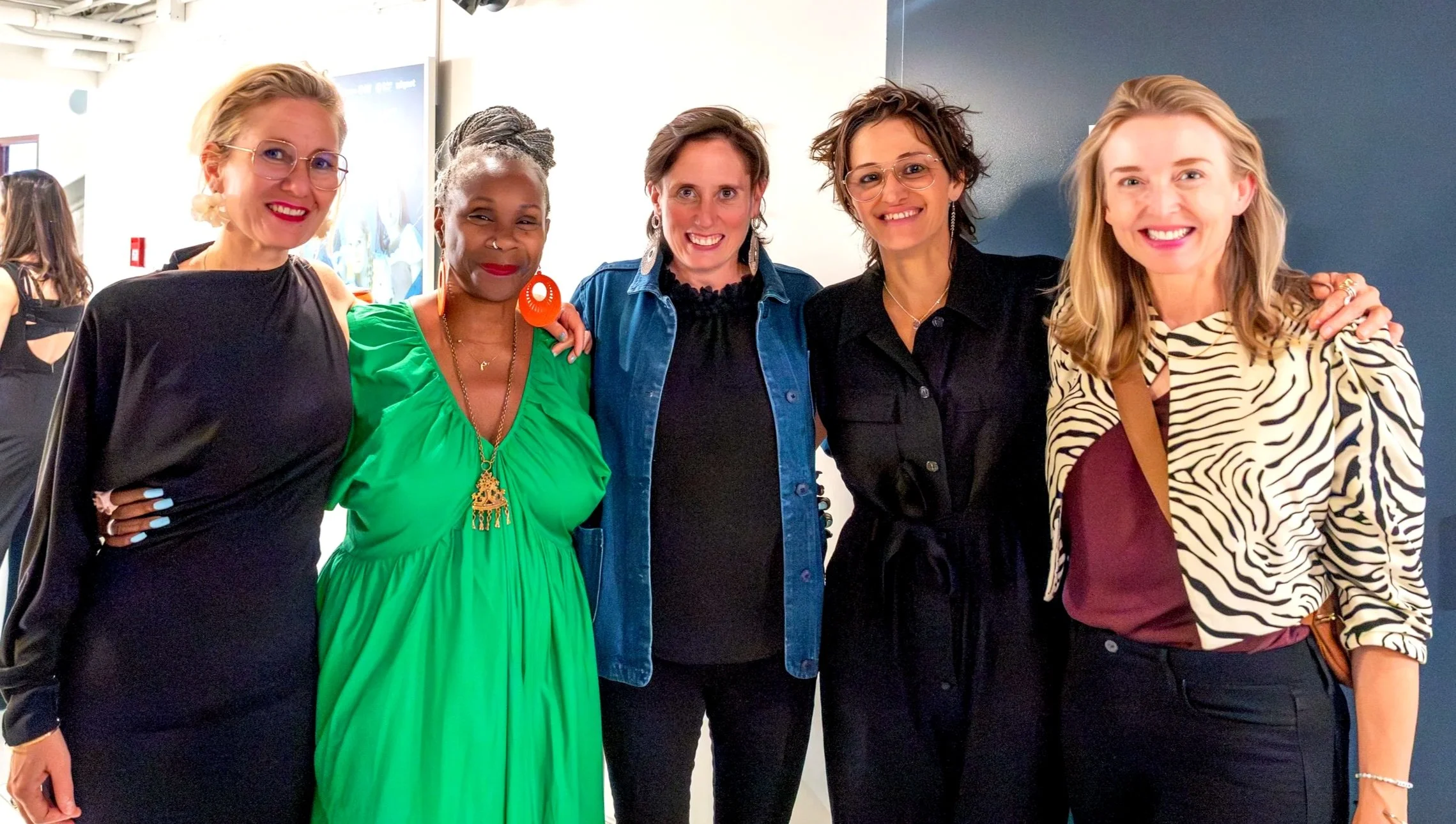
To a Flame is an explosive theatrical feast of image and language that pulls the audience deep into a Victorian Gothic Horror in which three confined women await the conclusion of their story in the ancestral home of the man they call Father. Secrets burn to be revealed, aches of the past refuse to be suppressed and the very house itself vibrates with desire for revenge. This groundbreaking work intertwines American Sign Language and English with vibrant movement and live music into a haunting, multi-sensory performance for Deaf and hearing audiences. Featuring celebrated Deaf performer and cultural leader Dawn Jani Birley, internationally-renowned director Josette Bushell-Mingo, and vivid text by Governor General Award-winning playwright Erin Shields, with the support of the company, this theatrical experience is not to be missed.
To a Flame was originally commissioned by Nightwood Theatre. It was initially developed by Nightwood Theatre and later 1s1 Theatre with further development support from Why Not Theatre. It also received a reading as part of the Heidelberger Stückemarkt in Germany [International Theatre Festival] in the German translation by Ulrike Syha, where it was awarded the 2026 International Author’s Prize.

Ensemble and Bürger*innenchor of Vorarlberger Landestheater, Bregenz/Austria. Photo by Anja Köhler
LA CLEMENZA DI TITO
by Wolfgang Amadeus Mozart, Libretto by pietro Metastasio
Vorarlberger Landestheater Bregenz, January 31 - February 19, 2020
Director Henry Arnold Musical Direction Karsten Januschke Set Design Bartholomäus Martin Kleppek Costumes Gabriele Kortmann Lighting Arndt Rössler Dramaturgy Birgit Schreyer Duarte Performed by Christopher Sokolowski, Narine Yeghiyan, Sophia Körber, Annelie Sophie Müller, Sarah Romberger, Thomas Stimmel, David Kopp and Zoe Hutmacher
ENGLISH Titus, the Roman emperor who was popular with the Senate and the people at the time of Vesuvius eruption, seems to be defying the zeitgeist today, as he was then. He defends the idea of kindness, charity and forgiveness against the principle of tyranny. Undeterred, he believes that mutual loyalty and love between the people and the regent strengthens their position as rulers, rather than obedience enforced through violence and fear. In an environment of political intrigue and instability—a belief defying reason? When Titus is betrayed by his closest friends, he has to decide anew how law and justice can be reconciled with his worldview, in which the good in people can ultimately triumph.
The conflict between the two principles of domination is also reflected in the figures of Sesto, Titus' best friend, and Vitellia, who, spurned by Titus, will exploit Sesto's total devotion to her to the extreme. In a heated atmosphere of high emotionality, the confusion of love also plays a central role in this opera by Mozart. Two actors will complement our ensemble of singers in a new version of the recitatives.
GERMAN Titus, der bei Senat und Volk beliebte Kaiser Roms zur Zeit des Vesuvausbruchs, scheint heute wie damals dem Zeitgeist zu trotzen. Er verteidigt den Gedanken der Güte, der Wohltat und des Verzeihens gegen das Prinzip der Gewaltherrschaft. Unbeirrt glaubt er daran, dass gegenseitige Treue und Liebe zwischen Volk und Regent dessen Position als Machthaber festigen, anstatt ein durch Gewalt und Angst erzwungener Gehorsam. In einem Umfeld der politischen Intrigen und Instabilität—ein Glaube gegen alle Vernunft? Als Titus von engsten Freunden verraten wird, muss er aufs Neue entscheiden, wie sich Recht und Gerechtigkeit mit seiner Weltsicht, in der das Gute im Menschen letztlich siegen kann, vereinbaren lassen.
Der Konflikt zwischen den beiden Herrschaftsprinzipien spiegelt sich auch in den Figuren des Sesto, Titus’ bestem Freund, und der Vitellia, die, von Titus verschmäht, Sestos völlige Hingabe zu ihr bis ins Extrem ausnutzen wird. In einer aufgeheizten Atmosphäre von hoher Emotionalität spielen auch in dieser Oper Mozarts die Verwirrungen der Liebe eine zentrale Rolle. Zwei Schauspieler werden hierbei in einer Neufassung der Rezitative unser hochkarätiges Sängerensemble ergänzen.

Christo Graham and Sook-Yin Lee. Photo by Daliah Katz
UNSAFE
by Sook-Yin Lee
Berkeley St Theatre, Canadian Stage, March 12-31, 2019
Director Sarah Garton Stanley Collaborative Consultant Zack Russell Dramaturgy Birgit Schreyer Duarte Performed by Sook-Yin Lee and Christo Graham Set Design Christine Urquhart Costumes Ming Wong Lighting Steve Lucas Video Design Roxanne Luchak Sound Ali Berkok Assistant Director Clayton Lee
AN INVITATION TO UNSAFE TERRITORIES: DRAMATURG’S NOTE Making theatre is unsafe. Theatre makers are at risk the moment they embark on a creative endeavour. They risk their own sense of self, in literal and figurative ways. They risk being absorbed by the process so fully, they neglect looking after themselves; they invite conflict with collaborators through the differences in their approaches, convictions or aesthetics; they may unearth personal truths during their journey that may affect their mental state and stability; and, of course, they risk “failure”, be it in their own eyes or in the public’s view, and its—perceived or real—consequences.
In the creation of Unsafe, the collaborative process itself became emblematical for the project’s themes. From its inception, it brought about insecurities and unmasked “safe” assumptions as false. Although a commission by Canadian Stage under former Artistic Director Matthew Jocelyn, Unsafe was largely developed after the company changed its leadership: inevitably, the paradigm in which the piece evolved shifted. The commission itself was first handed to one artist and via various detours, ended up with another. Most notably, the dynamics between art and censorship, the thematic starting point from which Unsafe unfolded, affected its evolution in unforeseen ways. Uncertainty around ownership shaped how we handled and viewed the material. We experienced first-hand how mechanisms of censorship, some subtle and some explicit, influenced our thinking and our actions. Who gets to tell which story? Is there a correct way of telling it? What are we saying if we are or aren’t saying it? What is safe to take as the truth?
Making difficult choices is a crucial part of making art, a method echoing censorship itself (of oneself or others). The final work will include some positions while excluding others. Each of these decisions, more or less overtly, reflects back on the creators’ places they occupy in the world. Thus, exposing or withholding our politics this way can make us feel acutely unsafe. And yet, daring to step onto unsafe territory, naming it and saying out loud what it does to us, can reveal new vantage points, new positions we weren’t aware we could claim. Moreover, allowing for unsafety inevitably also invites us to consider what makes us as individuals, and as a society or culture, feel safe. Despite its dangerousness, the creative process itself can become a place where we feel closest to our selves. Making Unsafe unveiled unexpected truths, opened old wounds and caused fresh injuries; but it also provided new clarity, moments where we sensed our priorities changing, our focus sharpening on what is worth arguing for—whatever it is that offers us safety, and what we are willing to do to keep that safe.
As audience members, you are partners in this collective effort of performing Unsafe. You, too, may find your boundaries shifting and your convictions built on shaky ground. Welcome to Unsafe.

Christopher Morris and Salvatore Antonio. Photo by Cylla von Tiedemann
Botticelli in the fire & Sunday in Sodom
by Jordan Tannahill
Toronto Theatre Critics Award for Best New Canadian Play 2016
Governor General's Literary Award 2018
Berkeley St Theatre, Canadian Stage, Toronto, April/May 2016
Directors Matjash Mrozewski and Estelle Shook. Sets and Costumes James Lavoie. Composition and Sound Design Sam Sholdice, Lighting Steve Lucas. Dramaturgy Birgit Schreyer Duarte. Performed by Salvatore Antonio, Valerie Buhagiar, Nicola Correia-Damude, Stephen Jackman-Torkoff, Christopher Morris and Alon Nashman.

Ngozi Paul
THE EMANCIPATION OF MS. LOVELY
Written and performed by Ngozi Paul
Dora Award for outstanding new play 2017
Crow’s Theatre, Toronto. March - April 2017
Director Zack Russell. Original Workshop director Keira Loughran. Original Dramaturgy Birgit Schreyer Duarte. Sound Design/Composition Waleed Abdulhamid and DJ L’Oqenz. Choreographer and Assistant Director Roger C. Jefferey.