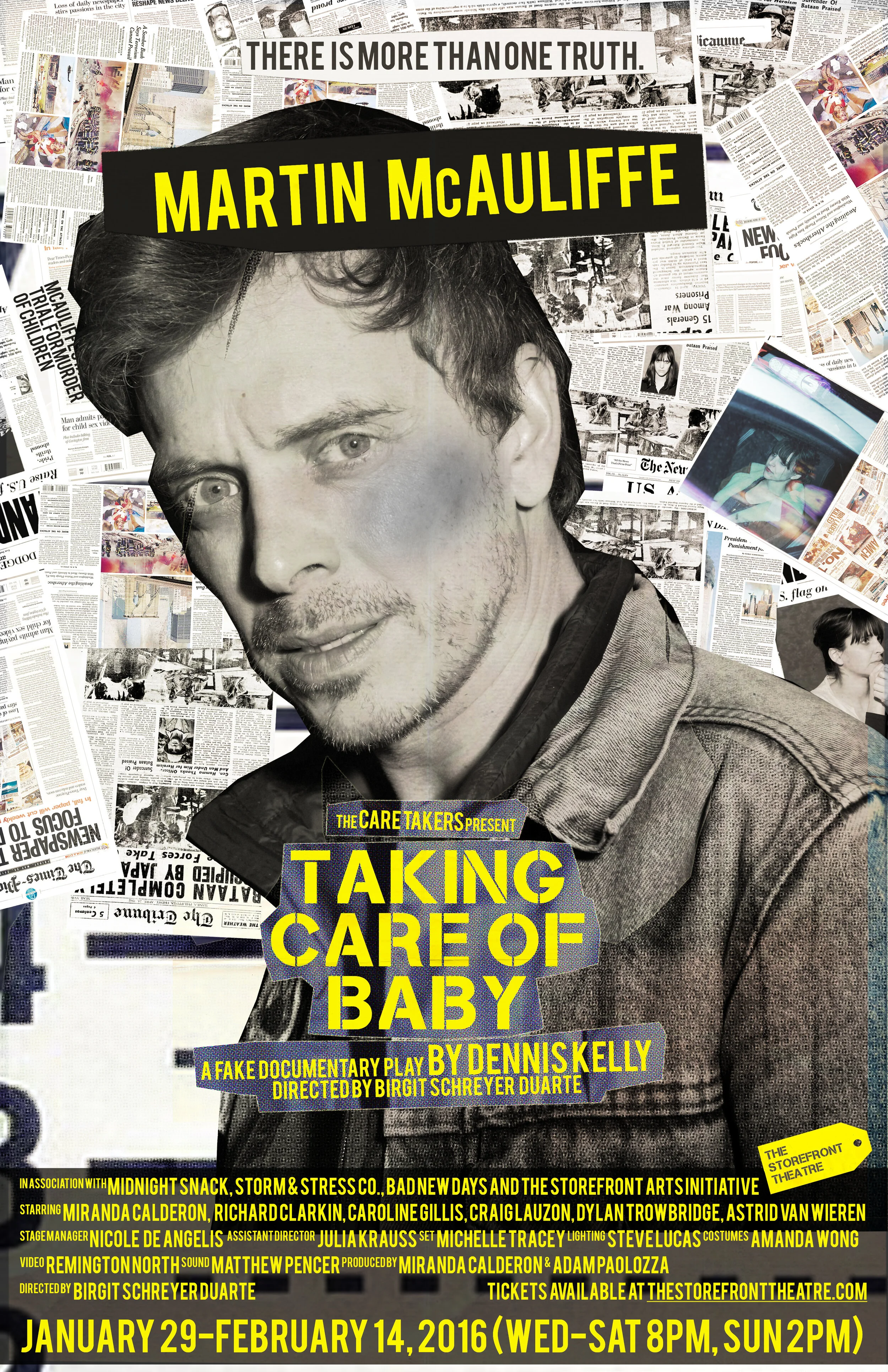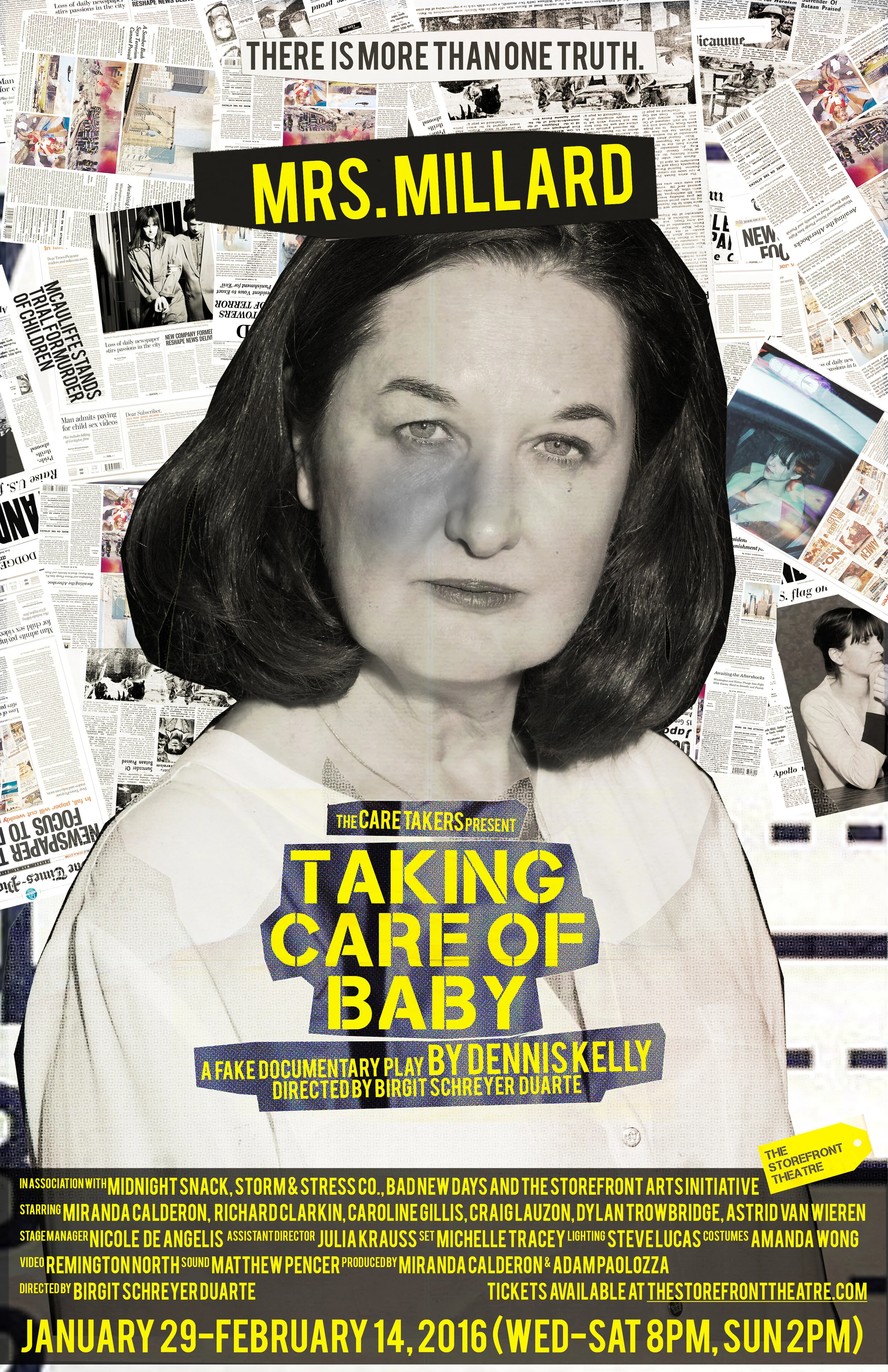
TAKING CARE OF BABY
by Dennis Kelly
Directed by Birgit Schreyer Duarte
Storefront Theatre, Toronto
Jan 29 - Feb 14, 2016
Canadian PREMIERE
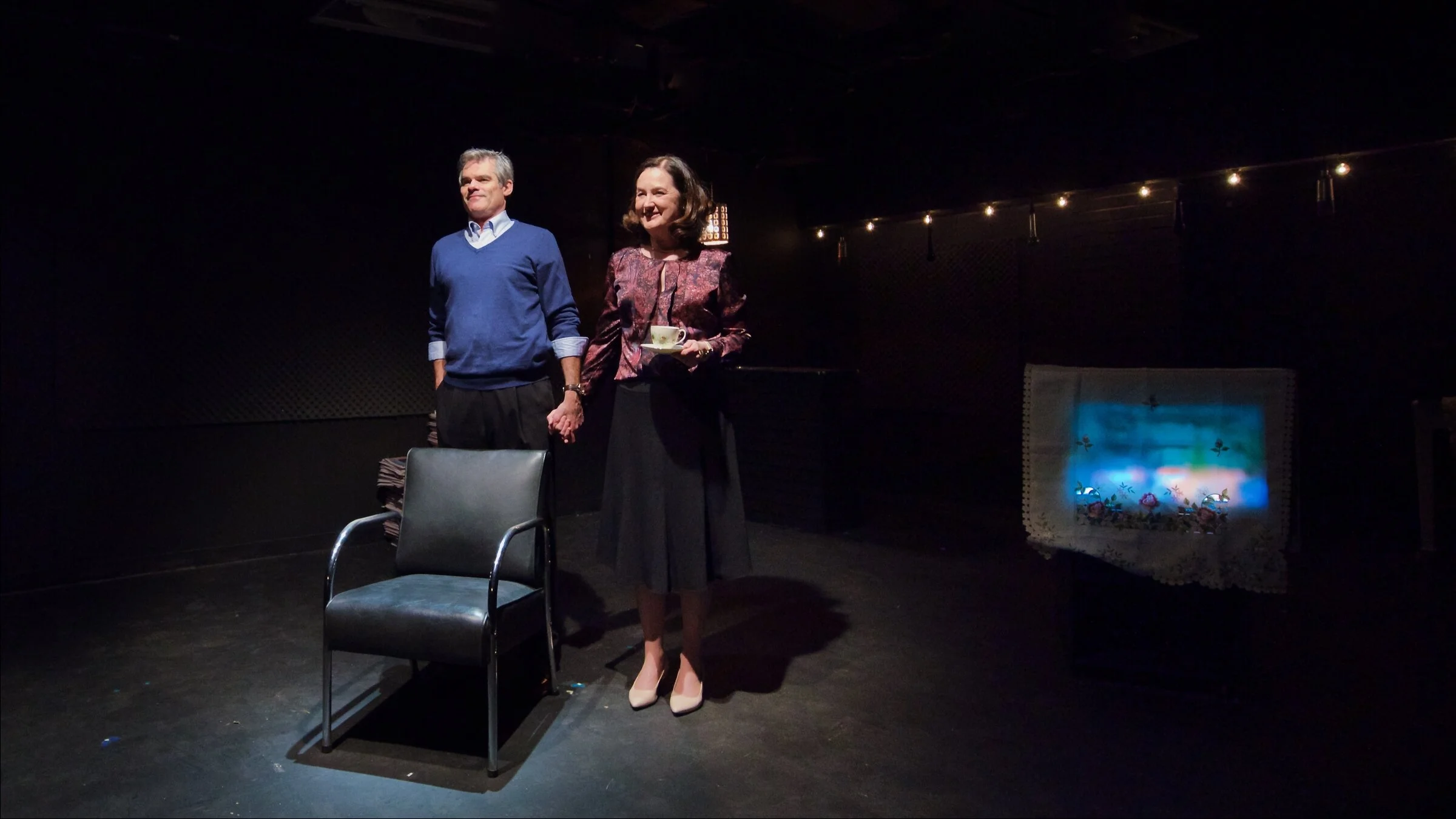
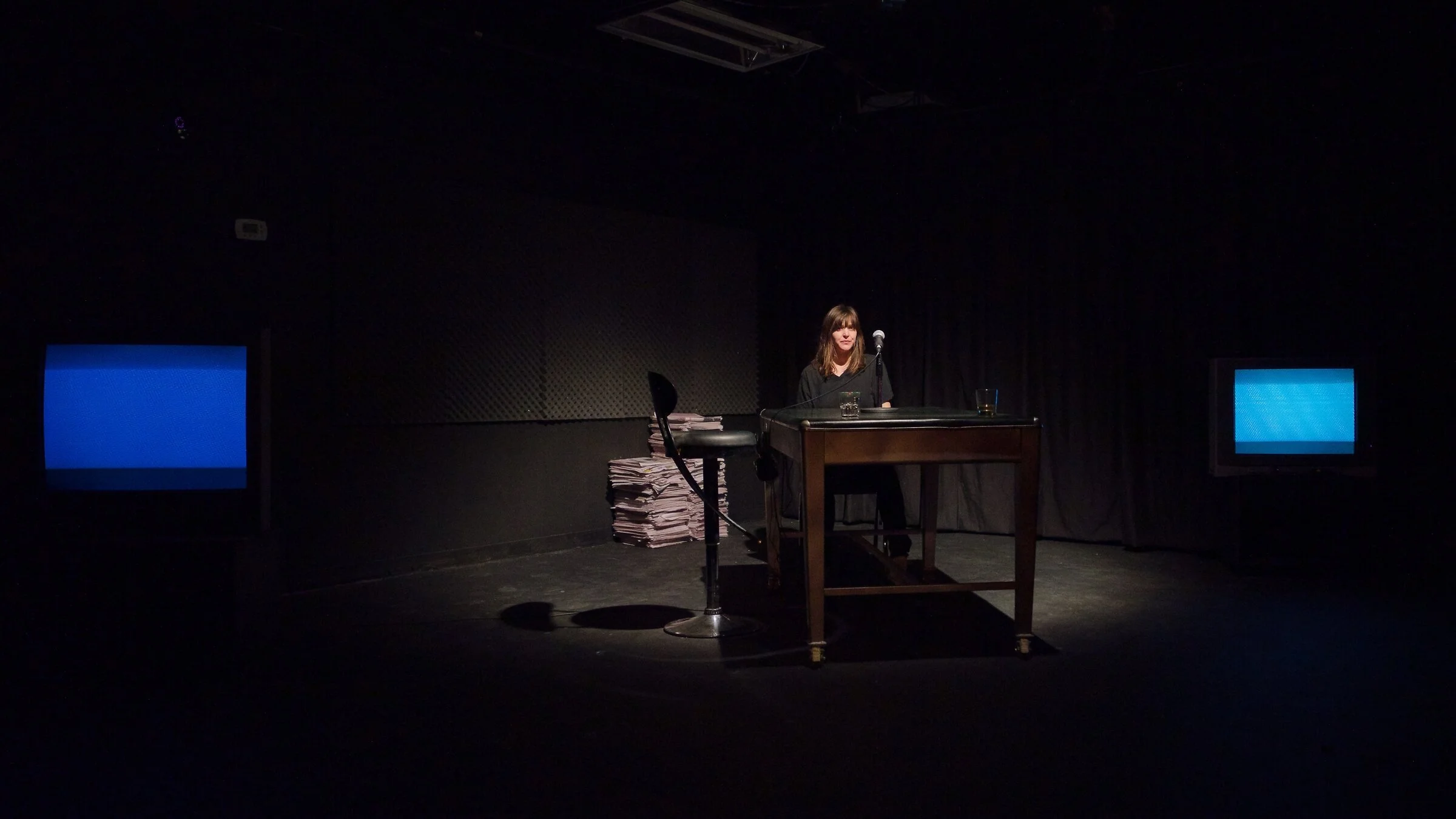
CAST + CREATIVE TEAM
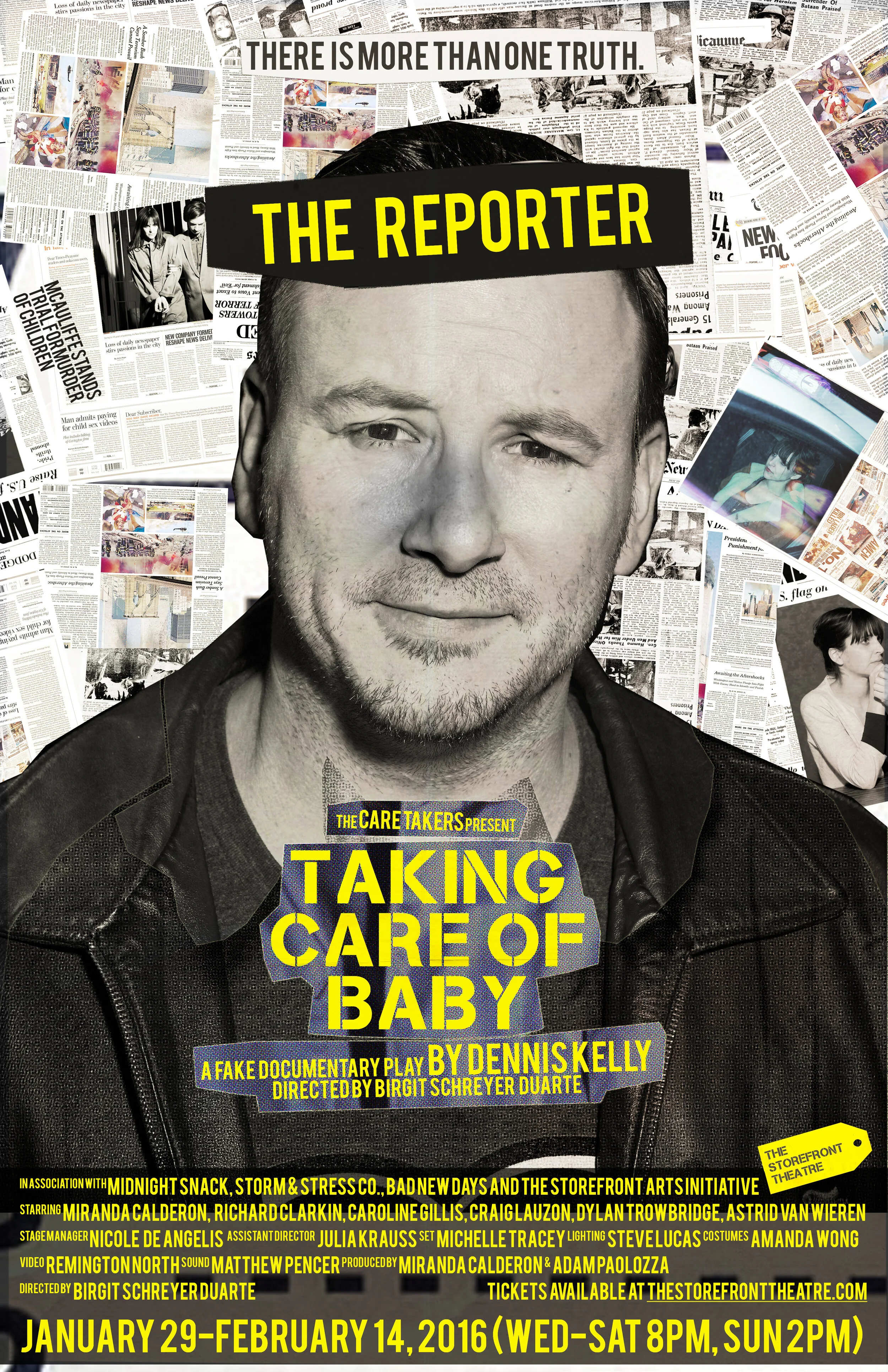
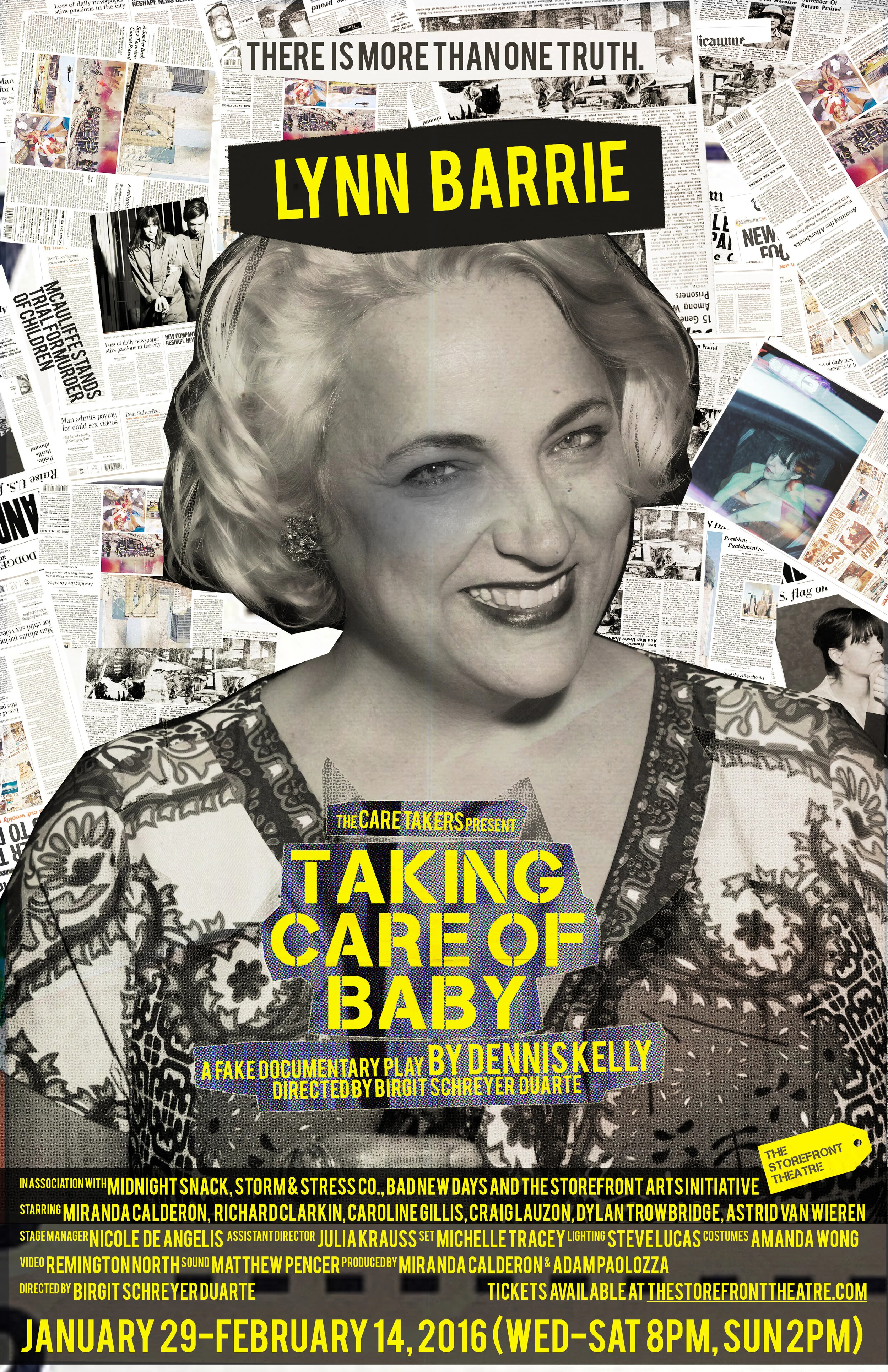
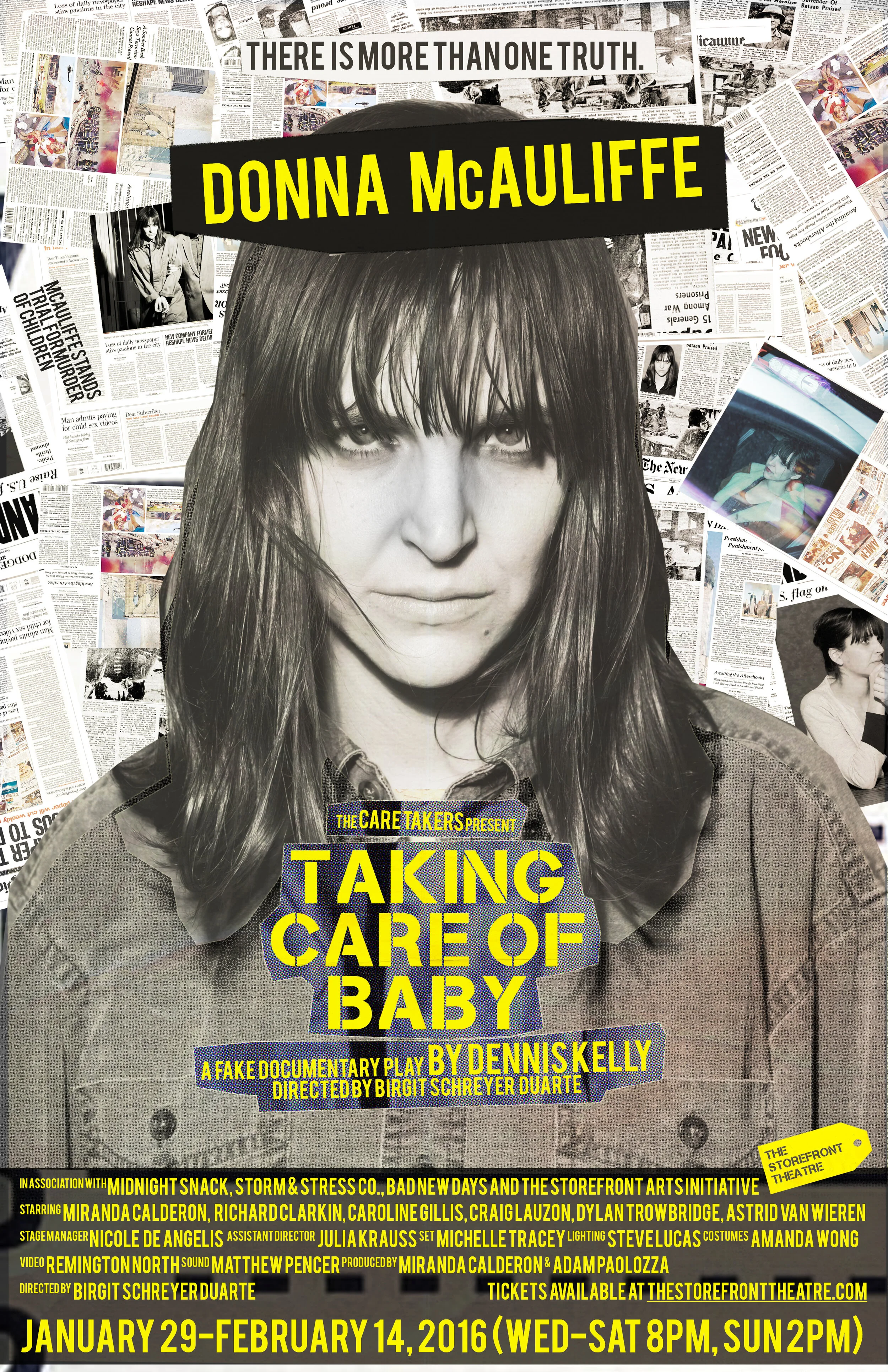
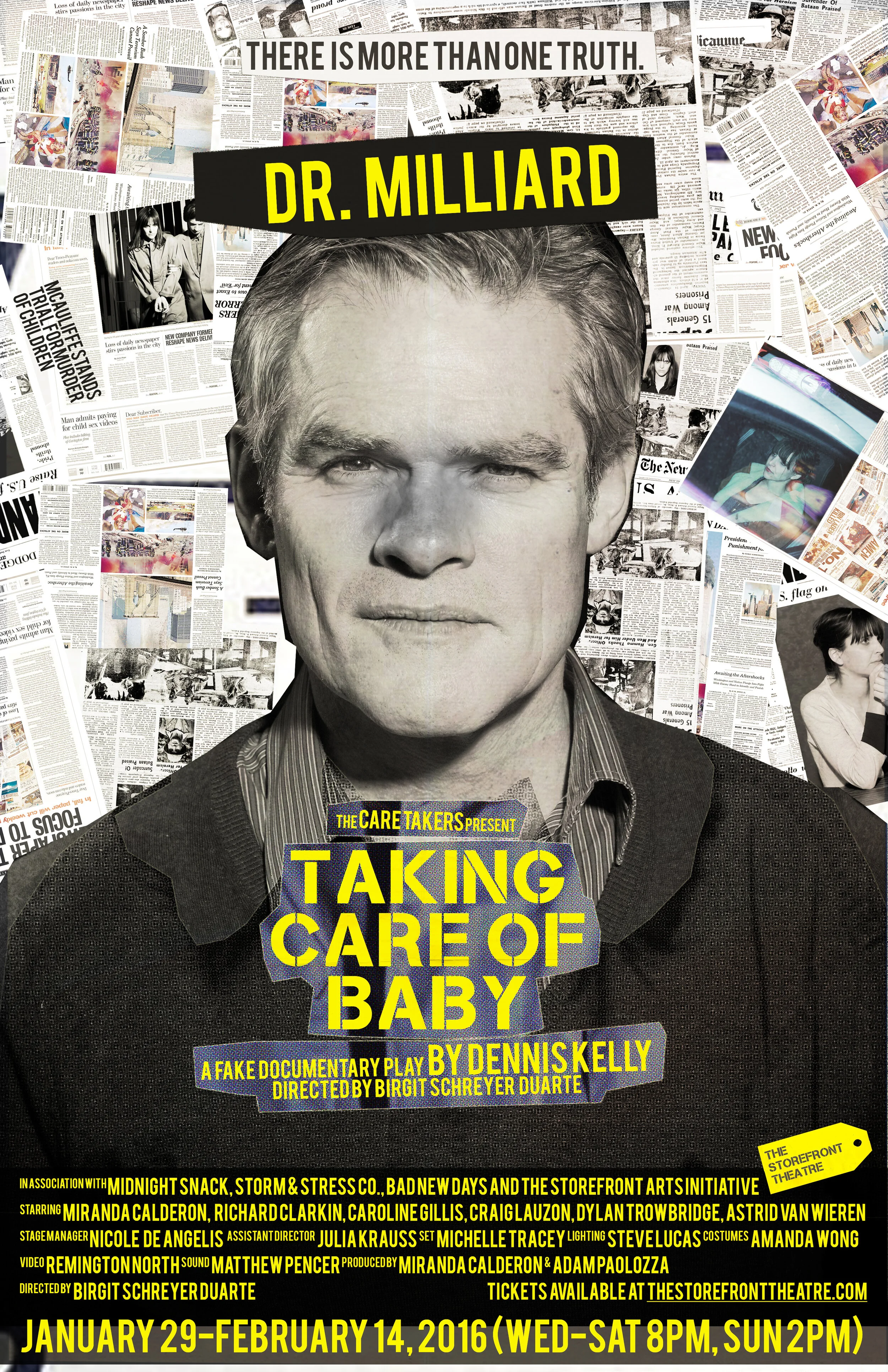
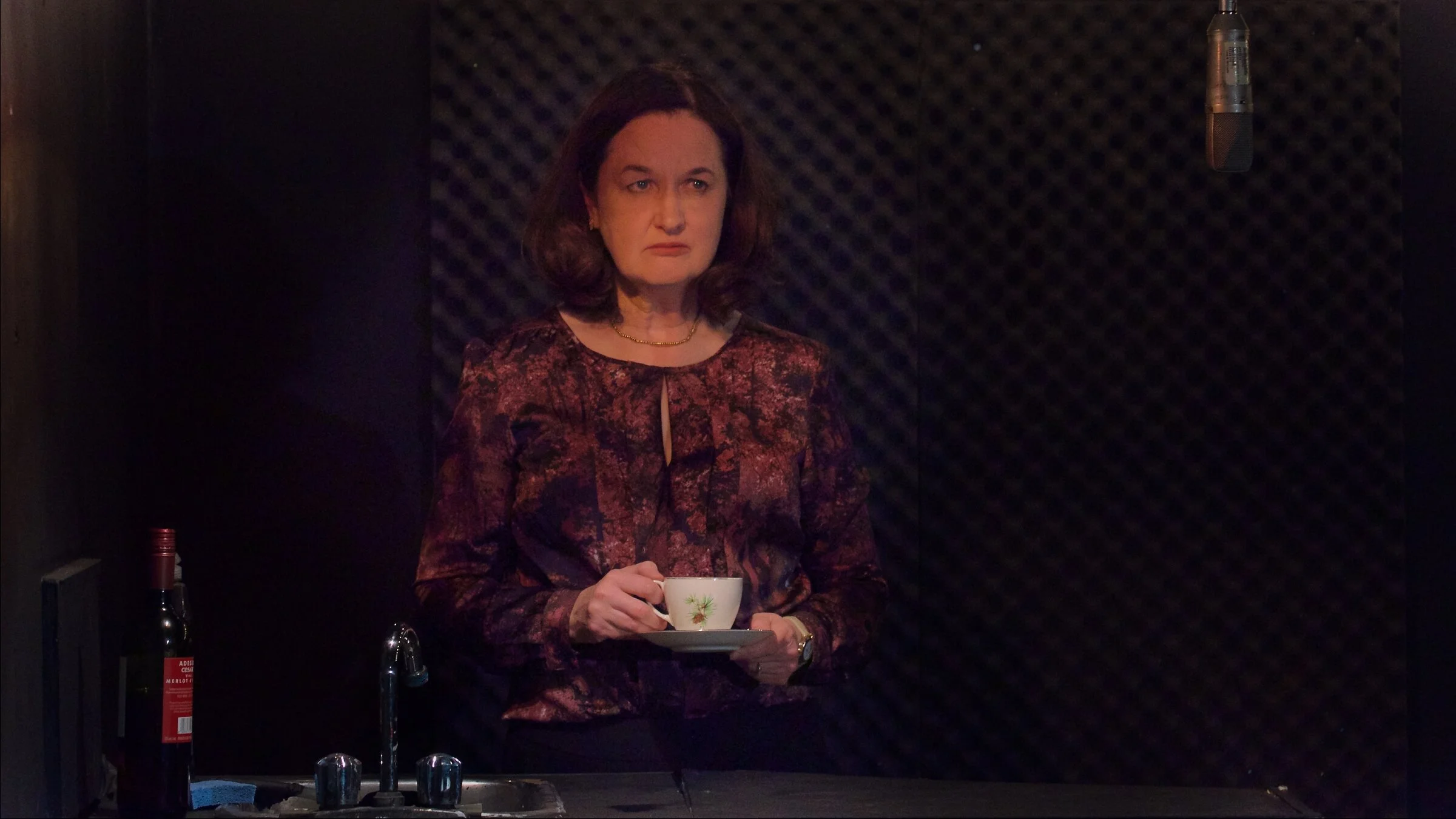
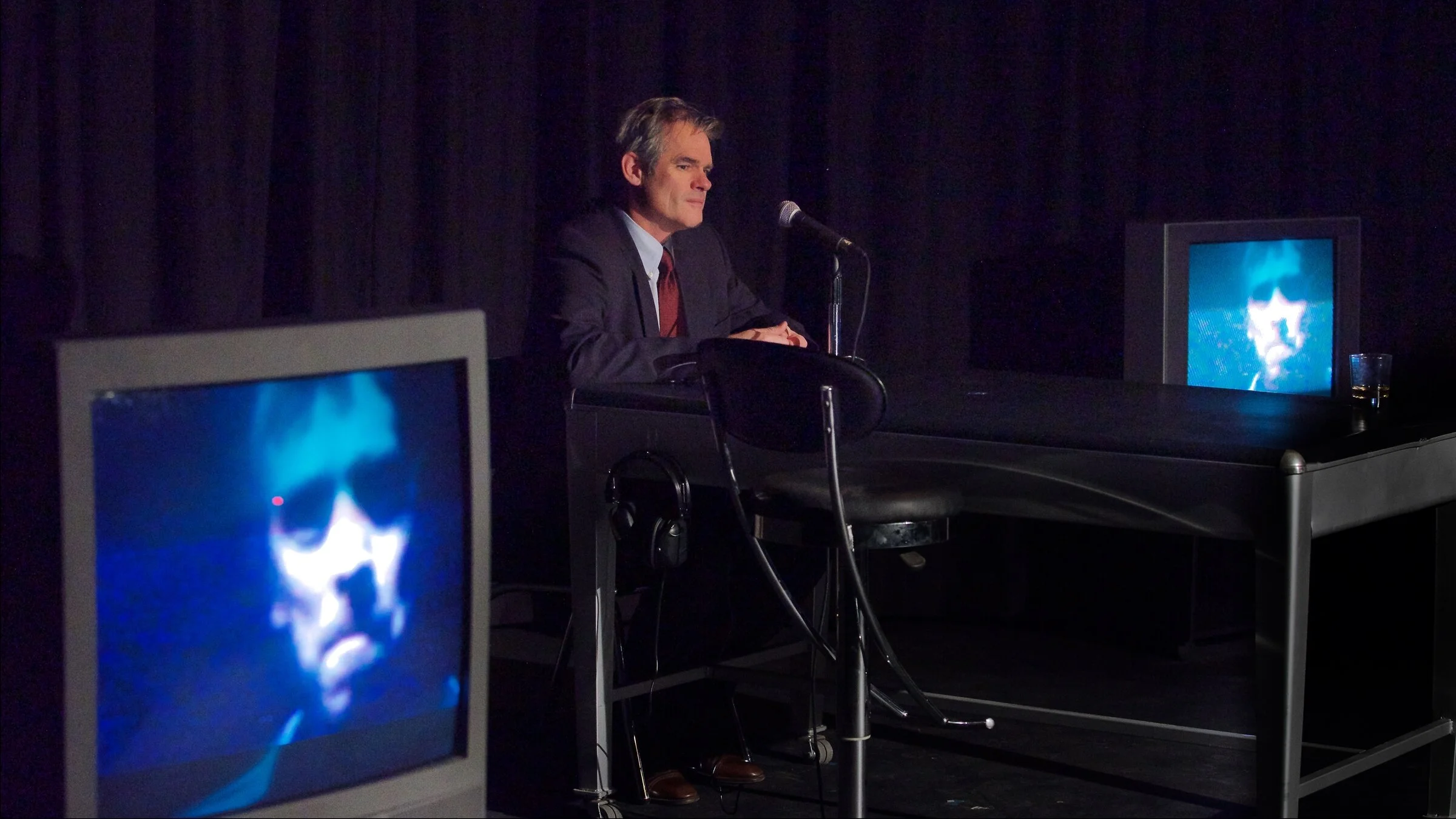
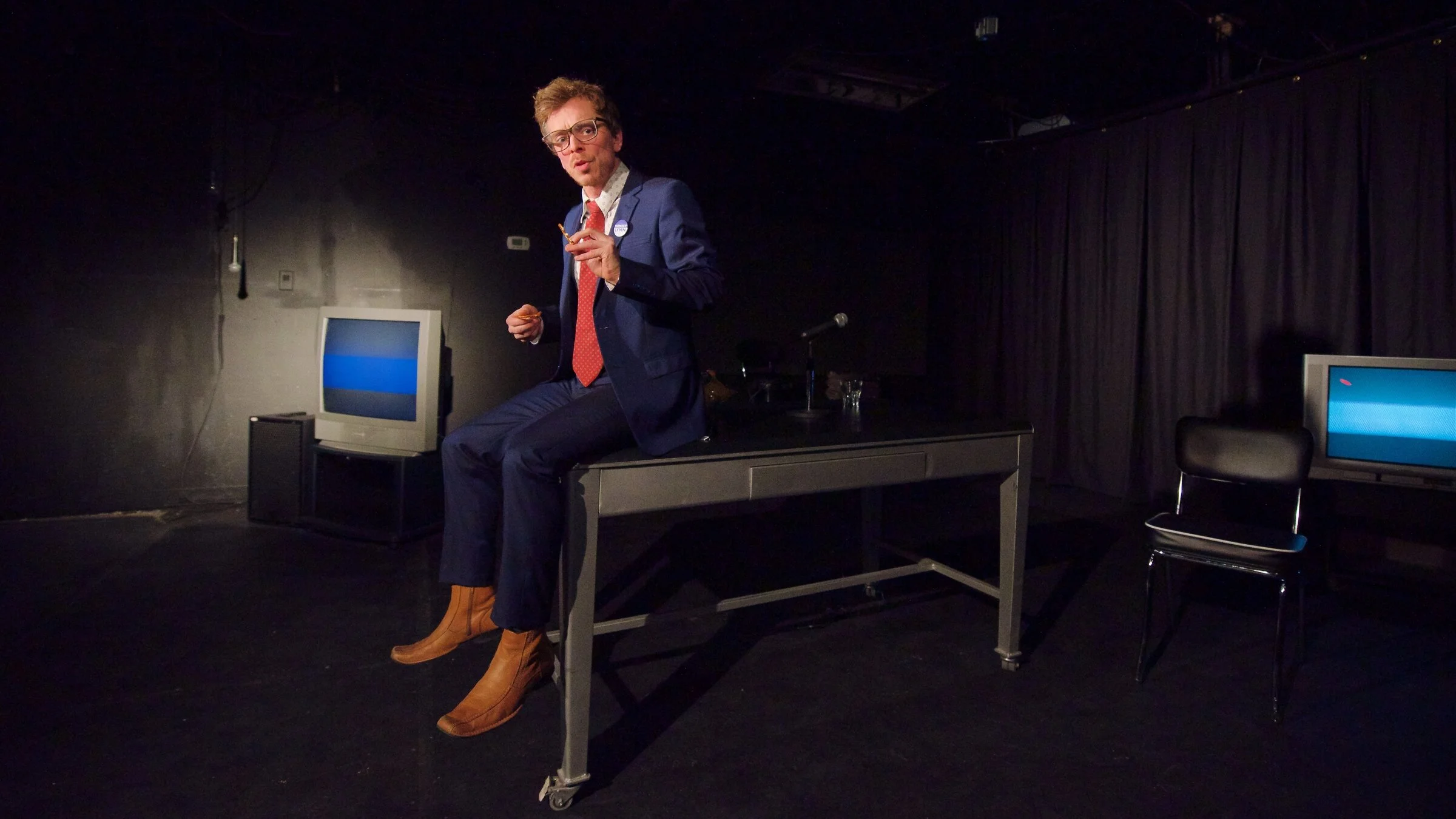
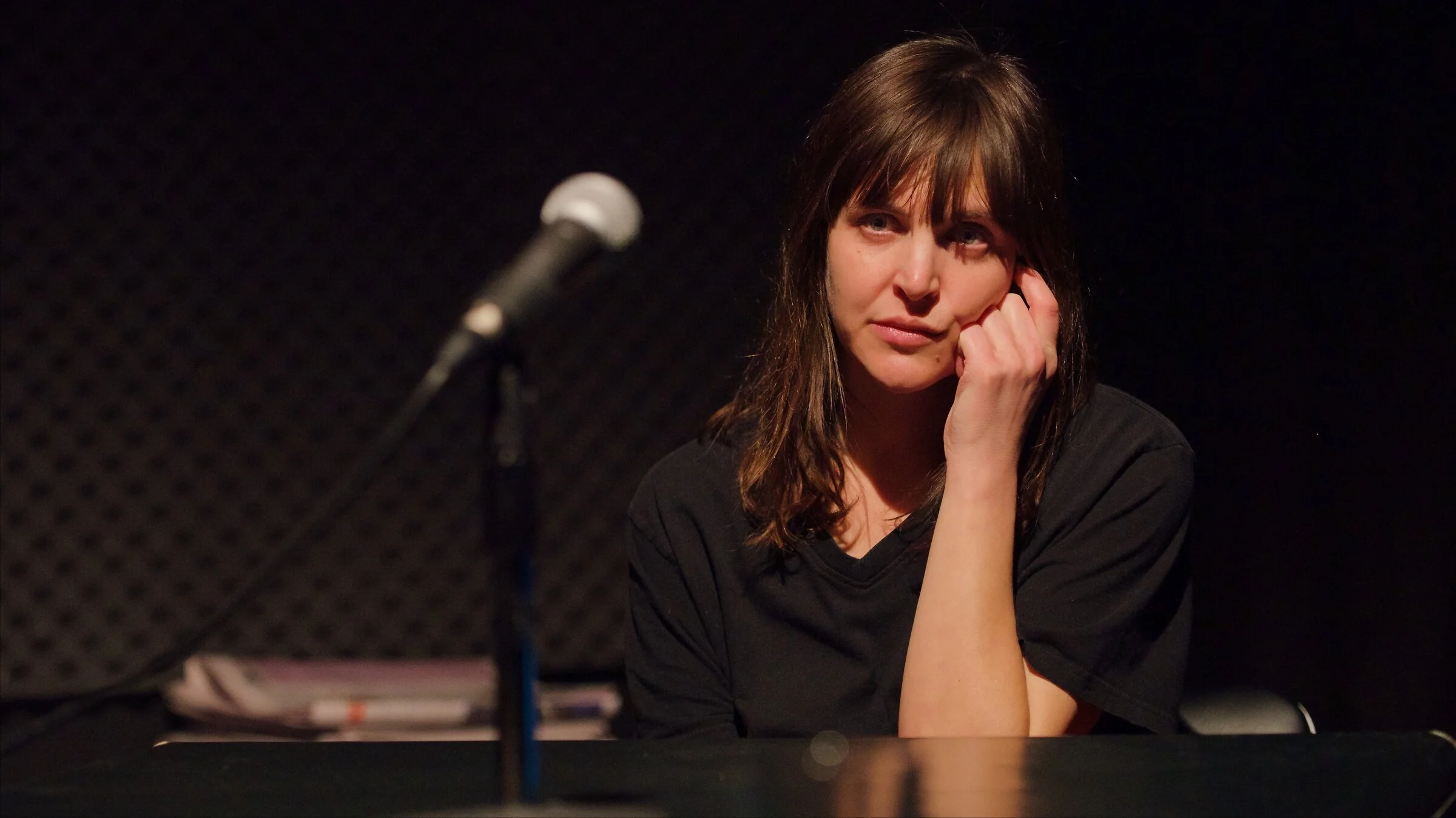
Donna McAuliffe Miranda Calderon. Dr. Millard Richard Clarkin. Mrs. Millard Caroline Gillis. The Reporter Craig Lauzon. Martin McAuliffe / Brian Dylan Trowbridge. Lynn Barrie Astrid van Wieren.
Set Michelle Tracey. Costumes Amanda Wong. Lighting Steve Lucas. Sound Matthew Pencer. Stage Manager Nicole de Angelis. Assistant Director Jewels Krauss. Producers Miranda Calderon (midnight snack), Adam Paolozza (Bad New Days), Birgit Schreyer Duarte (storm &nd stress) and The Storefront Initiative. Photography John Gundy.
a "rare experience – a night at the theatre that is both brain-expanding and hair-raising.”
✭✭✭✭✭ Stage Door (Christopher Hoile)
✭✭✭ / 4 The Star (Carly Maga)
✭✭✭.5 / 4 Globe and Mail (Kelly Nestruck)
"thought-provoking and suspenseful mystery (albeit a metatheatrical one)”
"Calderon’s measured performance is impressively impossible to get a firm grip on.”
"Never has a clip of Darkwing Duck been employed so horrifically."
"Miranda Calderon is absolutely riveting as Donna ... This is one of the most moving depictions of depression I have ever seen on stage."
"Schreyer Duarte has drawn intense performances from the entire cast."
"Craig Lauzon ... is delightfully eccentric"
"Dylan Trowbridge is a standout ... somehow pulling off acting as the play’s comic relief and emotional heart.”
"The juxtaposition of the severe tragedy and the comedic scenes is brilliant"
"Taking Care of Baby is powerful, complex drama directed with insight and acted with passion. It’s a show any lover of contemporary theatre should not miss."
"I left feeling thoroughly entertained.”

ABOUT THE PLAY
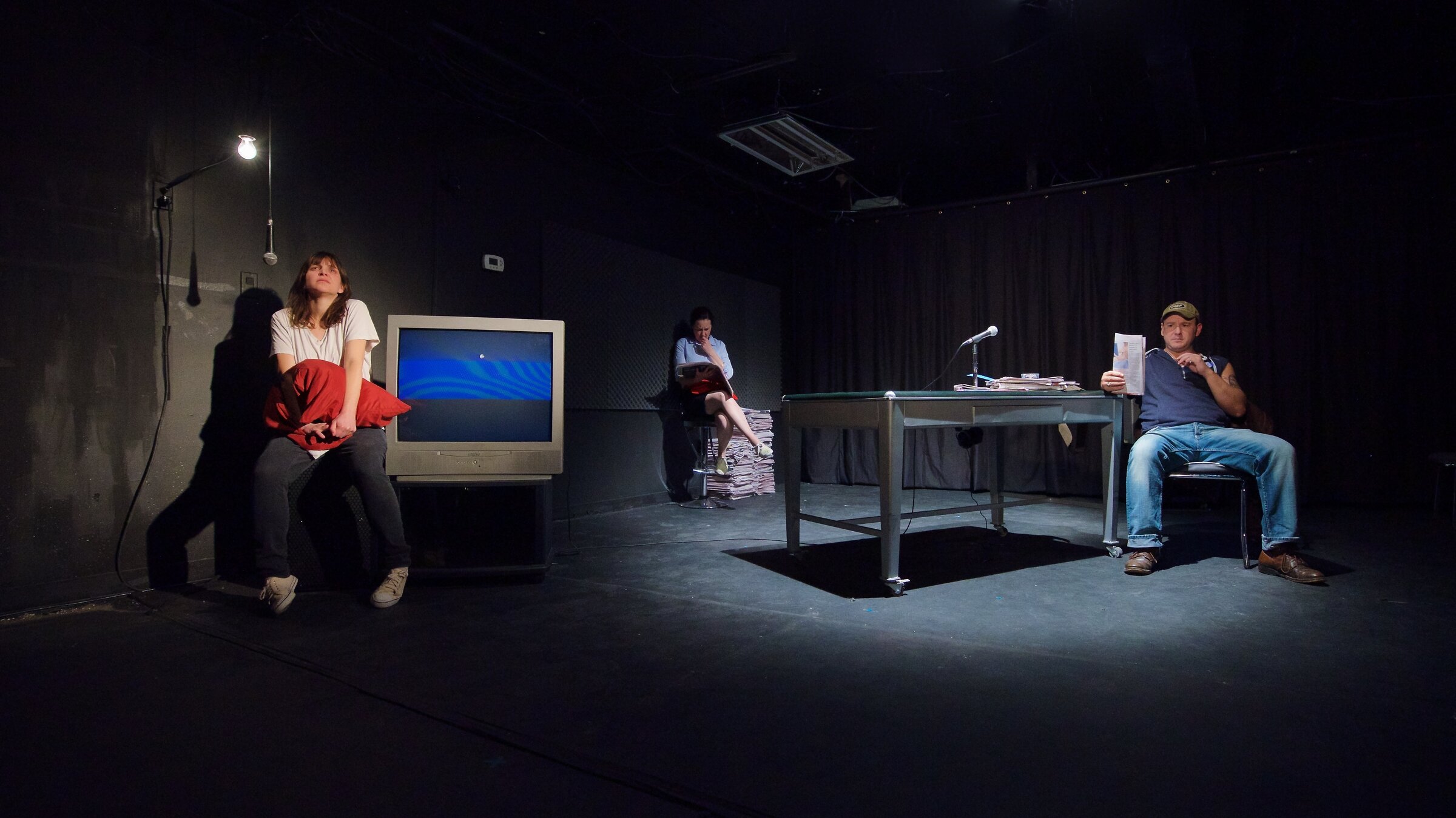
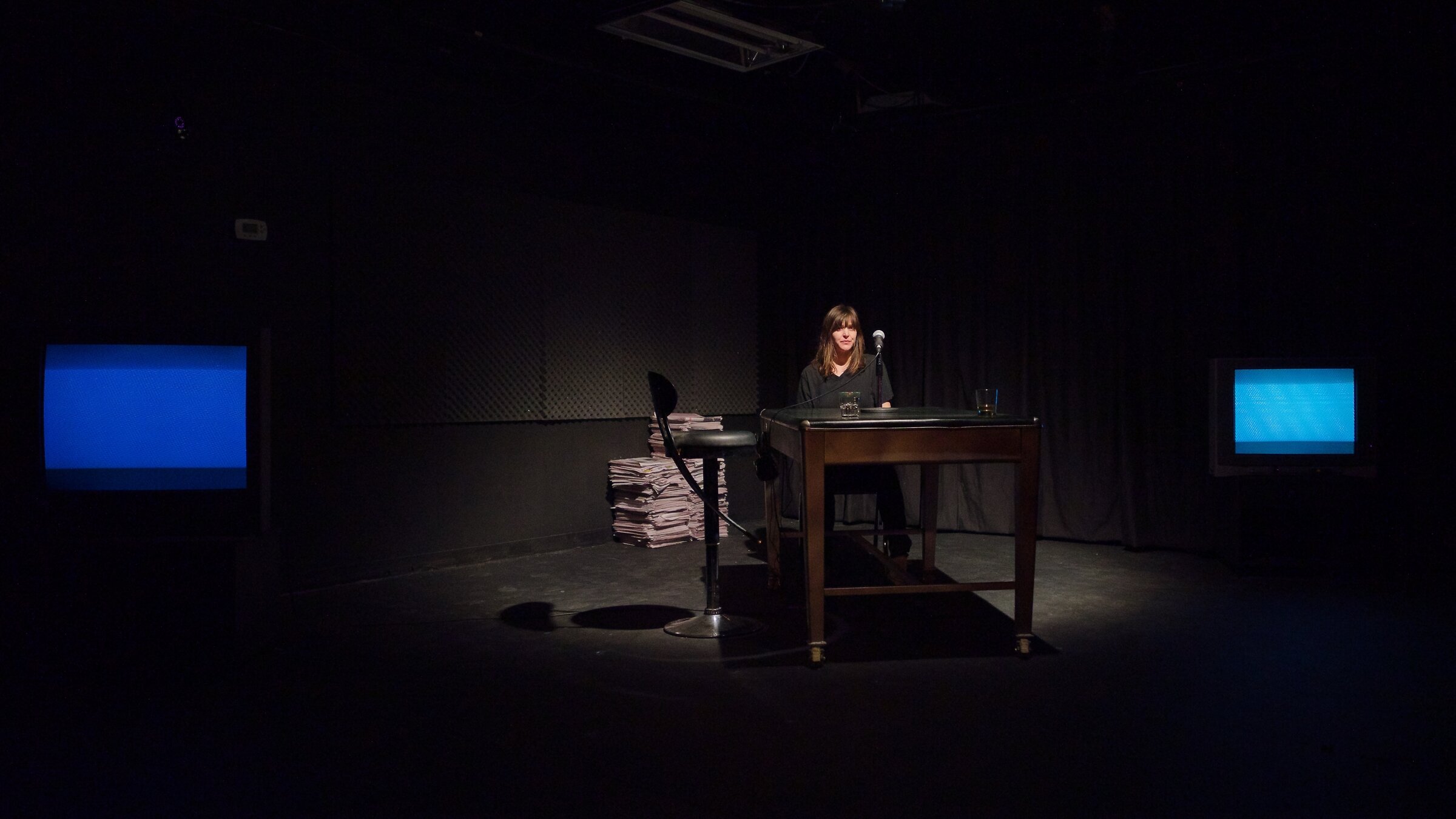
Playwright Dennis Kelly investigates the haunting story of a woman accused of murdering her two infant children. This makes for a spectacular news story involving a ruthless politician, an enraged, grieving father, and a lawsuit against the playwright.
It also involves a lawsuit against the mother, a grieving politician, and a spectacular playwright. As we learn more, the truth becomes increasingly hard to catch.
Canadian premiere by one of Britain's most celebrated new writers.
DIRECTOR’S NOTES
“But it’s the truth. It’s what you said.” For me, these lines spoken by the “Interviewer” in Taking Care of Baby encapsulate the core concern of Dennis Kelly’s play, as they hint at the complex relationship between what we consider to be “true” and the reasons why we do so. Depending on how exactly the performer chooses to emphasize these lines, we can extract from them multiple, crucially different interpretations of said relationship: Are the words “true” because the speaker in question is expected to speak the truth? Does a story become “real” by way of an experience mutually shared by speaker and recipient, as is the case in the theatre? Can anything be called true as long as the speaker is convinced of its truth? Or, rather, as long as the recipient is willing to believe it? Whose truth is the “real truth”? With its origins in the British theatre scene of the 1970s, the “Verbatim” Documentary genre has gained enormous popularity. This is reflected not only in the rise of Reality TV, but also in our local theatre landscape (such as Project: Humanity’s The Middle Place, about local homeless kids), as well as in critically acclaimed international projects touring the world stages (Theater Hora’s Disabled Theatre, e.g.).
Not unlike Reality TV, Verbatim Theatre has always claimed to offer audiences something as close as possible to the “truth”, namely, “reality”. The popular success of Netflix’ Making A Murderer underlines the topicality of Dennis Kelly’s concern. Both works discuss our need as social beings to identify a commonly accepted “truth” of what happened, and both make the claim that what is presented as rooted in “actual events” is extremely attractive to us. Simultaneously, these works foreground the troubling notion that any form of mediatization of events will inevitably shape the recipients’ perception of the facts. Even though we know there is no such thing as objective representation of reality, as spectators we are eager to let ourselves be manipulated—by the choice of images, voices, structure, aesthetic, etc., presented to us. Taking Care of Baby is at once part of this genre and also reaches beyond these claims: by dissecting the very mechanisms that Verbatim Documentary theatre utilizes to “get at the truth”. The play thereby invites us to consider what it means to live with the insight that, as “Dr. Millard” informs us, “There’s more than one truth.” Birgit Schreyer Duarte
Double-click to edit...